
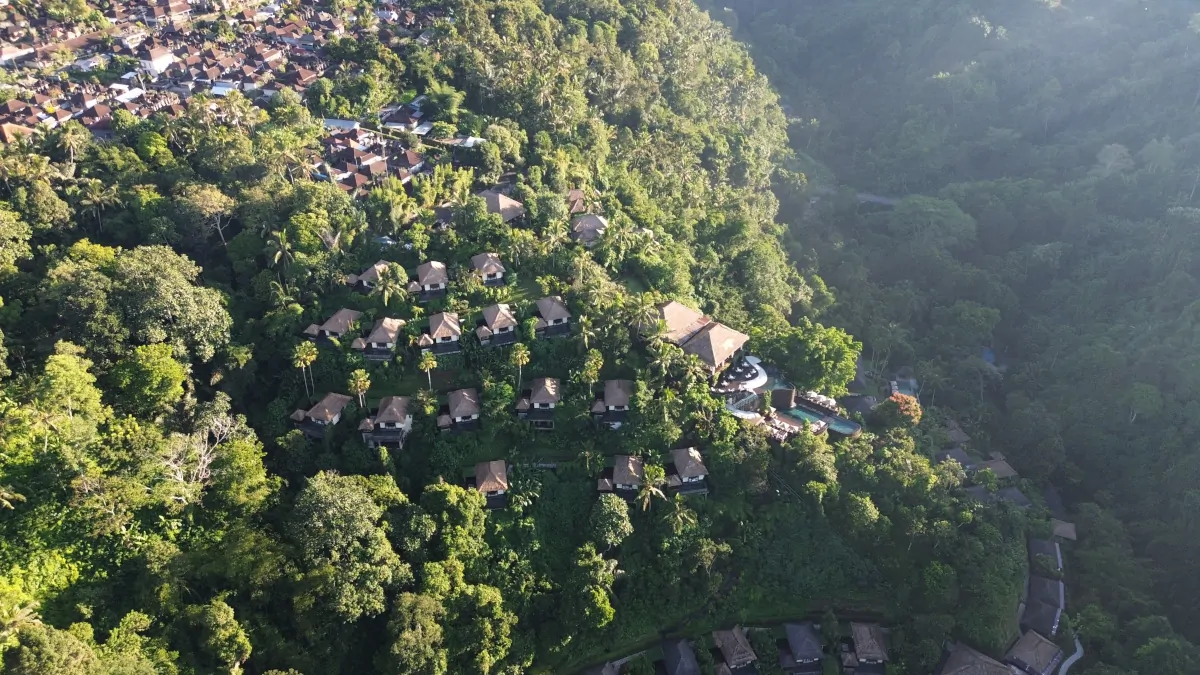
About Hanging Gardens of Bali
Where Architecture, Nature and Balinese Spirit Become One
Hidden high above Bali's sacred Ayung River, surrounded by emerald rainforest and
overlooking an ancient temple valley, Hanging Gardens of Bali is more than a luxury
resort—it is one of the world's most celebrated and instantly recognisable hospitality
destinations.
Since opening in 2005, the resort has redefined jungle hospitality through a rare
combination of visionary architecture, authentic Balinese craftsmanship and profound
respect for nature. Designed to disappear into its surroundings rather than dominate
them, Hanging Gardens was conceived as a sanctuary where guests experience the
rainforest not as spectators, but as part of it.
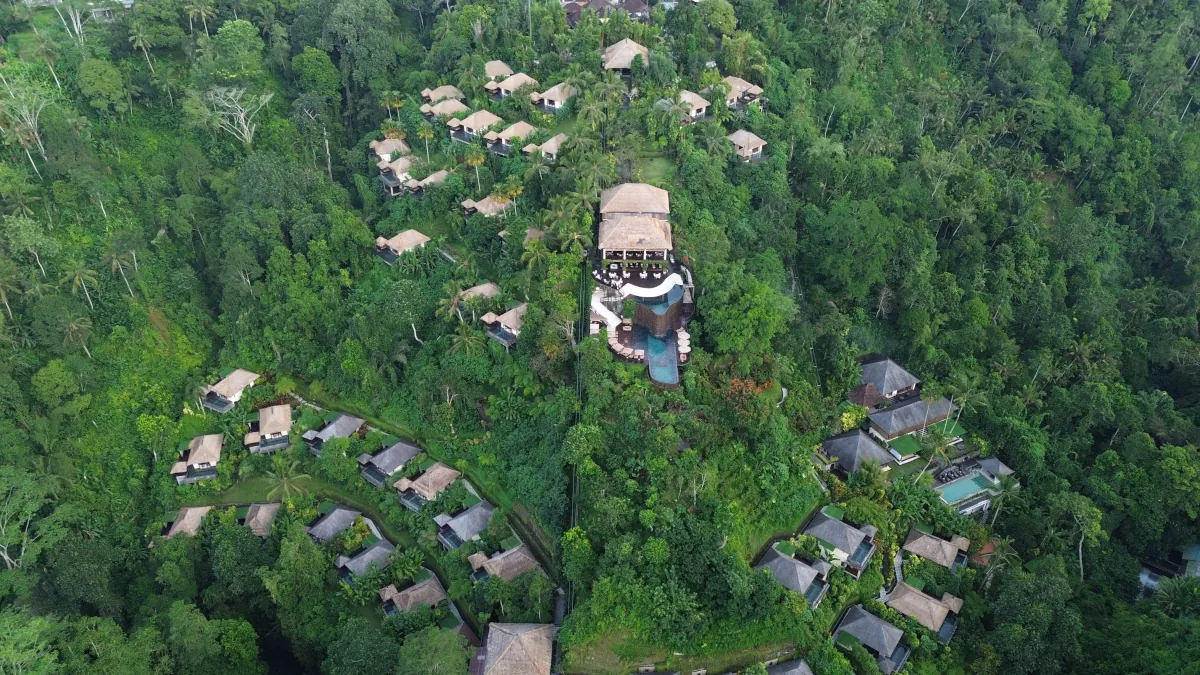
A Vision Built in Harmony with Nature
Created between 2003 and 2005, the resort was an extraordinary undertaking. More
than 4,000 Balinese craftsmen and craftswomen worked using traditional techniques,
indigenous materials and locally sourced stone and timber to create a resort unlike
any other.
Every beam, stone and handcrafted element was carried into the jungle by hand
before roads reached the site. Rather than imposing itself upon the landscape, the
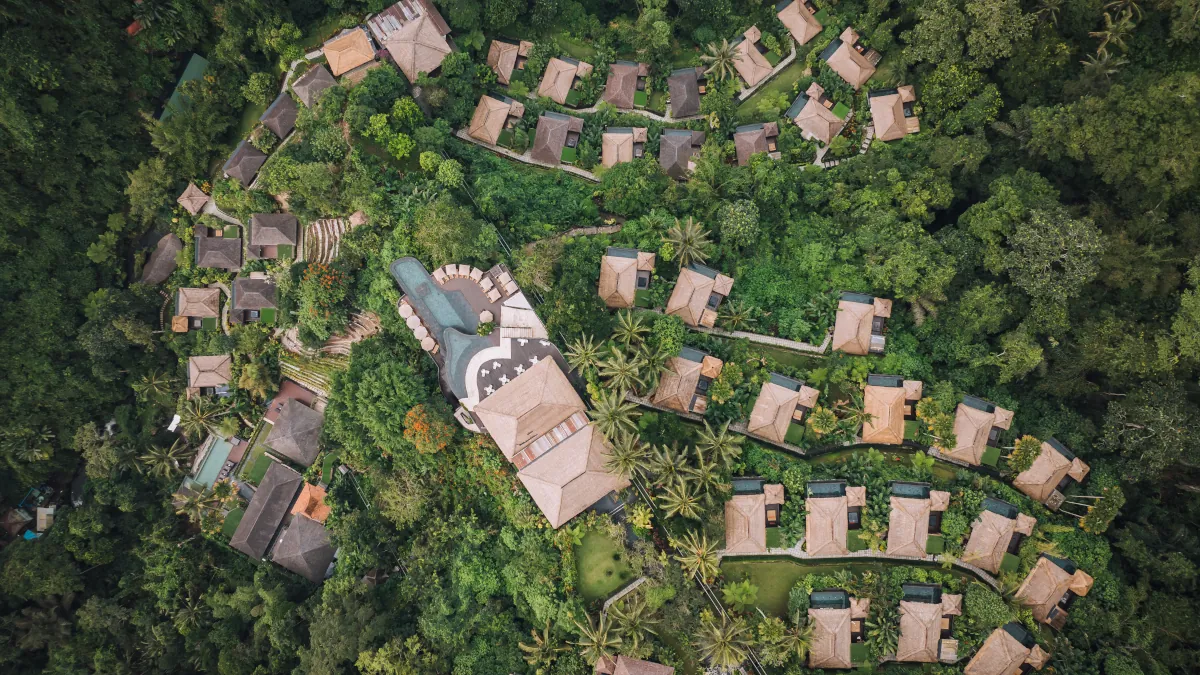
resort was designed using pioneering environmental engineering principles that allow
the architecture to blend naturally into the rainforest, with the philosophy that nature
should always remain the dominant force. Remarkably, not a single tree was removed
during construction—an extraordinary commitment to sustainability that was decades
ahead of its time and continues to define the resort today.
Throughout the resort, the Balinese philosophy of Tri Hita Karana—the harmony
between people, nature and the spiritual world—guides every aspect of the guest
experience. Every pathway, villa and garden has been carefully positioned to respect
the natural contours and sacred energy of the valley.
The resort's masterplan also integrates the ancient principles of Feng Shui, carefully
aligning buildings, pathways and water features to promote harmony, the continuous
flow of positive energy, stability and a sense of infinity throughout the dramatic valley
landscape. Together with Balinese philosophy, these timeless design principles create
an environment where architecture, nature and spirituality exist in perfect balance.
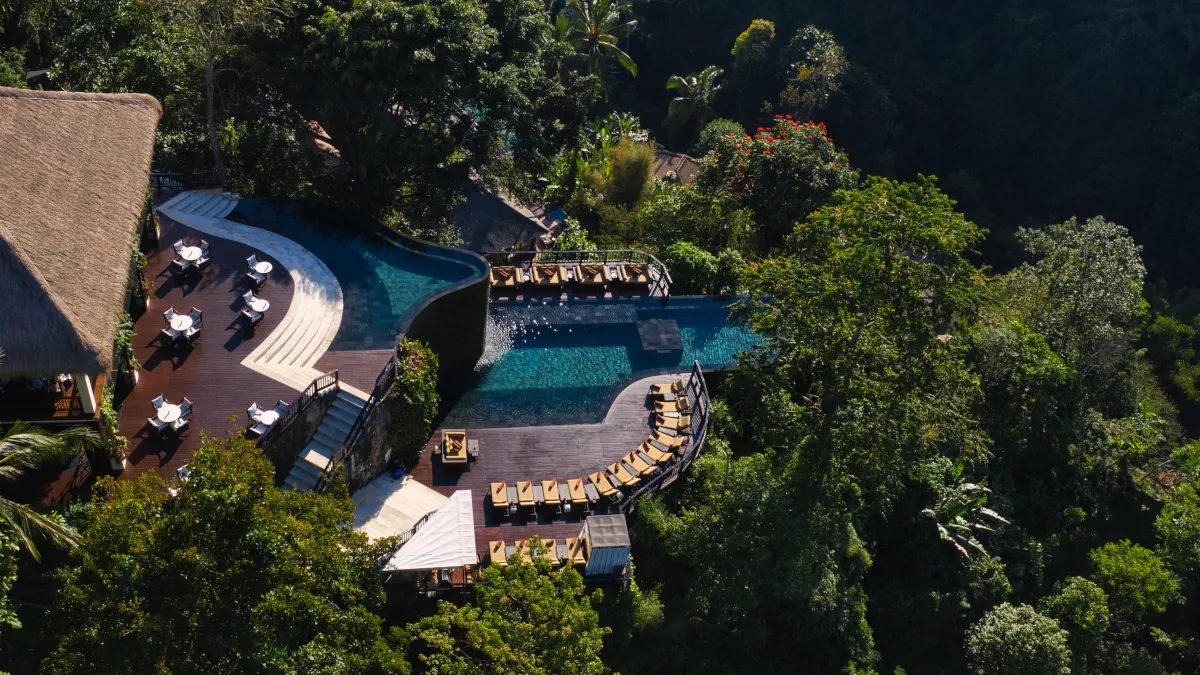
The Pool That Captured the World's Imagination
At the heart of Hanging Gardens of Bali lies one of the most recognisable swimming
pools ever created.
Inspired by the cascading rice terraces that define Bali's landscape, the resort's iconic
twin-tiered heated infinity pool appears to float effortlessly above the rainforest canopy,
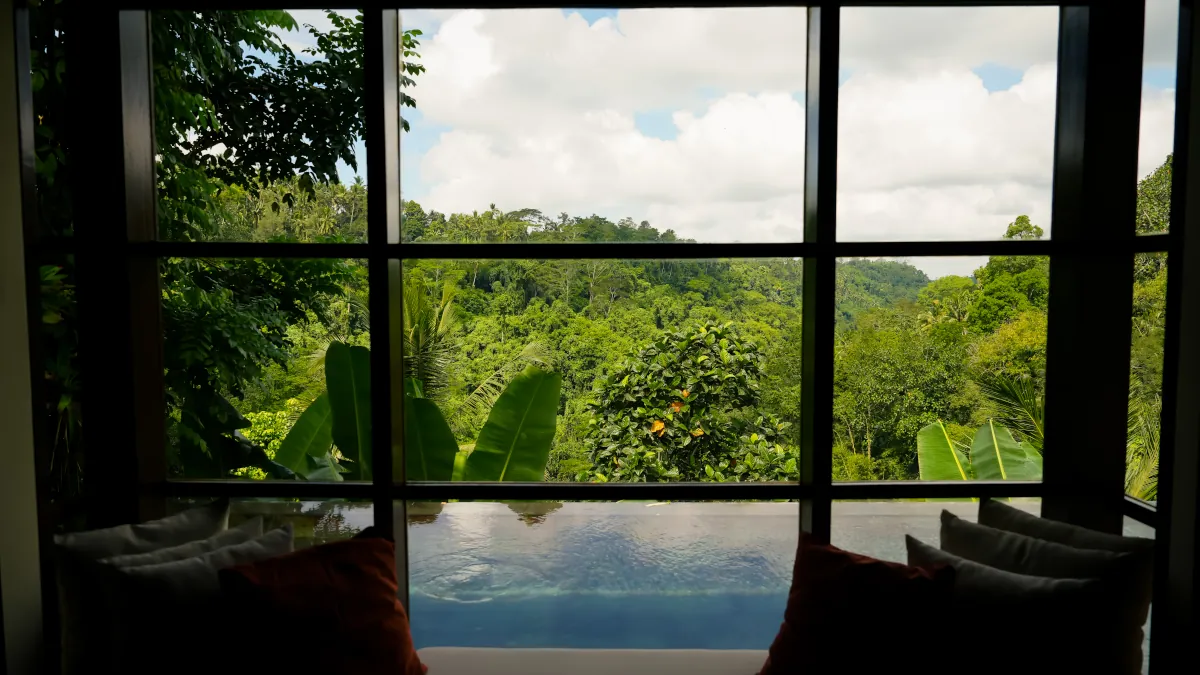
creating the unforgettable sensation of swimming among the treetops. Every private
villa also features its own heated infinity pool, allowing guests to enjoy complete
privacy while immersed in the surrounding jungle.
For two decades, this remarkable architectural masterpiece has become one of the
most photographed pools in the world and an enduring symbol of luxury travel in Bali.
It remains the image that has inspired millions of travellers to discover the island.
A Timeless Reinvention
Respecting its extraordinary legacy while embracing the expectations of today's luxury
traveller, Hanging Gardens of Bali recently completed a comprehensive three-year
transformation led by internationally acclaimed designer Clint Nagata, founder of
BLINK Design Group.
Rather than reinventing the resort, the renovation simply refined what made it so
special. Signature designer furniture by Henk O. T. Design, handcrafted by skilled
Balinese artisans, blends effortlessly with carefully curated interiors and timeless
architectural details. Every element was chosen with respect for the original vision,
creating a resort that feels both beautifully renewed and unmistakably true to its
character.
International Recognition
Over the past two decades, Hanging Gardens of Bali has become one of Asia's most
awarded luxury resorts.
Among its many international accolades are:
- Forbes Travel Guide Four-Star Award
- Named among the World's Most Extraordinary Swimming Pools by Condé Nast Traveler
- Recognised by TripAdvisor as home to one of the world's most iconic infinity pools
- Featured by Architecture & Design among the World's Most Unique Swimming Pools
- Recipient of World Luxury Hotel Awards, World Luxury Spa Awards, World Luxury Restaurant Awards, World Travel Awards and Seven Stars Luxury Hospitality Awards
- Consistently recognised by leading international travel publications as one of Bali's premier destinations for romance, wellness and luxury travel.
An Icon of Global Luxury Travel
Few resorts in the world are instantly recognisable from a single image.
Hanging Gardens of Bali is one of them.
Its dramatic jungle setting, iconic architecture and legendary infinity pool have made
the resort a sought-after location for international editorial photography, luxury brand
campaigns, television productions, documentaries, destination marketing and global
media. Over the years, it has become one of the most photographed hospitality
destinations in Southeast Asia, helping define the visual identity of luxury travel in Bali.
A Legacy That Continues
Twenty years after welcoming its first guests, Hanging Gardens of Bali continues to
set the benchmark for jungle luxury.
Built with respect for nature, inspired by Balinese culture and continually evolving
through thoughtful innovation, the resort remains one of the world's most
extraordinary places to stay—a destination where architecture, hospitality and nature
exist in perfect harmony.
Hanging Gardens of Bali is not simply a place to stay—it is a destination where
architecture becomes landscape, luxury becomes tranquillity, and every journey
becomes part of Bali's enduring story.
By the Numbers
- Established: 2005
- Location: Payangan, Ubud, Bali
- Private Villas & Suites: 39
- The Hidden Palace: 2,000 sqm of living space set within a private 5,000 sqm estate
- Private Heated Infinity Pools: Every villa
- Signature Landmark: The Iconic Twin-Tiered Heated Infinity Pool
- Balinese Craftsmen & Craftswomen: 4,000+
- Construction Period: 2003–2005
- Recent Transformation: Three-year redesign by BLINK Design Group
- International Awards & Accolades: More than 50